How the Riyadh-to-Paris Move Transformed Esports World Cup Tickets Demand
Operational shifts and high-profile esports matchups drive unprecedented ticket demand at Paris Expo Porte de Versailles.
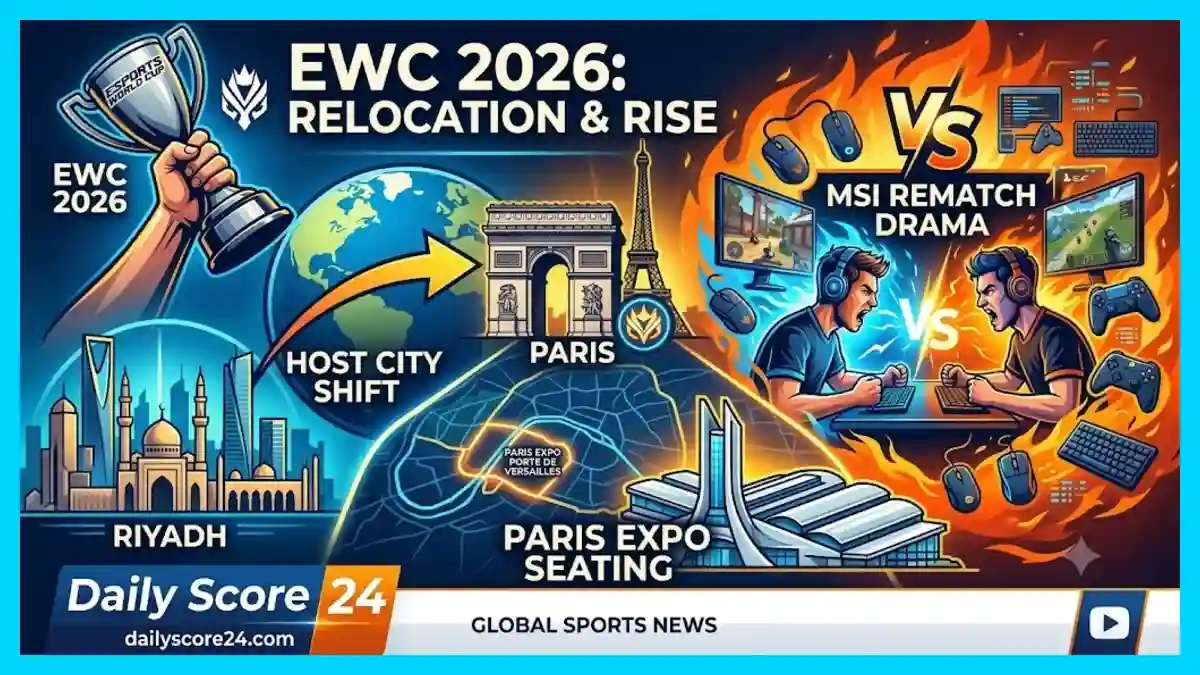
The global competitive gaming landscape has experienced an unprecedented operational shift, prompting a massive surge in public interest regarding Esports World Cup 2026 Paris tickets. Originally scheduled to take place in Riyadh, Saudi Arabia, the multi-title tournament series run by the Esports Foundation was officially relocated to the Paris Expo Porte de Versailles in France. This emergency operational pivot, executed by the Esports Foundation and ESL FaceIt Group, was implemented due to escalating security concerns tied to regional volatility in the Middle East.
The sudden change in host cities has created an immediate logistical hurdle for international spectators, driving breakout query volumes for travel, venue capacity, and premium seating passes. Simultaneously, the competitive momentum of the tournament’s opening phases has intensified ticket demands. In the tournament’s first week, 100 Thieves captured the international Valorant title by defeating world champions NRG, while Japanese trio UNLIMIT completed a historic comeback in Apex Legends. Additionally, individual milestones such as Lee “Faker” Sang-hyeok being named a permanent Game Ambassador alongside Cristiano Ronaldo and Magnus Carlsen have solidified the event’s cultural footprint.
As the tournament shifts deeper into its extensive seven-week schedule, fans from the United States, United Kingdom, Canada, and Australia are actively evaluating live-attendance options versus standard streaming alternatives. The commercial ecosystem surrounding the event is expanding rapidly, with major corporate partnerships, data integration contracts via firms like Stream Hatchet, and global distribution platforms scaling up production. This comprehensive guide provides verified parameters on ticketing structures, venue configurations, and economic tracking for the ongoing Paris event.
Operational Relocation and Venue Logistics at Paris Expo Porte de Versailles
The transition of the Esports World Cup from its traditional base in Riyadh to Western Europe represents the largest mid-circuit relocation in professional gaming history. The Esports Foundation finalized the move to the Paris Expo Porte de Versailles to guarantee the safety of the 2,000 participating players representing over 200 international clubs. The complex logistics involved adapting a convention center space into specialized, high-capacity tournament stages.
The modern venue framework utilizes distinct, brand-integrated competitive spaces to isolate simultaneous match broadcasts. The primary arena structures within the Paris Expo include the stc Arena for tier-one arena titles, the Lenovo Legion Gauntlet for multi-team battle royales, and the Allianz Vault, which handles specialized fighting game brackets. Each zone features independent ticketing tiers and unique spectator restrictions based on stage capacities.
To complement the core professional tournaments, organizers launched the peripheral EWC Fan Fest directly adjacent to the main competitive halls. The festival hub provides immersive public access to developer showcases, technology demonstrations, and content creator meet-and-greet zones. While access to major game finals requires targeted arena passes, the Fan Fest serves as a high-throughput gate to maximize on-site fan engagement and local merchandise sales.
Ticketing Tiers, Pricing Breakdown, and Hospitality Options
The official ticketing distribution for the seven-week event is organized week-by-week, allowing spectators to purchase access based on individual game titles. Ticket tiers range from general admission single-day passes to premium multi-day bundles that grant entry to high-profile grand finals. Organizers have instituted early-bird structures, warning consumers of progressive price scaling as key tournament dates approach.
+-----------------------------------+------------------------------------+-----------------------------------+
| Ticket Tier                       | Access Parameters                  | Premium Inclusions                |
+-----------------------------------+------------------------------------+-----------------------------------+
| Single-Week General Pass          | Entry to designated game arenas    | Standard seating, Fan Fest access |
+-----------------------------------+------------------------------------+-----------------------------------+
| Premium Tournament Pass           | Full week access across all stages | Guaranteed goodie bag, prime seats|
+-----------------------------------+------------------------------------+-----------------------------------+
| Esports Embassy Hospitality       | Panoramic views of stc Arena       | Curated catering, VIP networking  |
+-----------------------------------+------------------------------------+-----------------------------------+
For high-net-worth attendees and corporate sponsors, the event introduces the Esports Embassy. Positioned above the stc Arena and the Lenovo Legion Gauntlet, this dedicated hospitality facility provides panoramic viewing angles of the competitive stages. The Embassy tier integrates premium catering services and private lounges, catering to the growing intersection of corporate sponsorship and elite networking within the sports entertainment market.
Weekly Schedule Matrix and Title Distribution
The 2026 iteration features 25 distinct tournaments spanning 24 specific video game titles. The structure eliminates traditional real-time strategy games like StarCraft II, focusing instead on high-viewer shooter genres, MOBAs, and sports simulations. The tournament timeline runs continuously from July 6 through August 23, 2026.
Week 1 (July 6 – July 12): Concluded events in Valorant, Apex Legends, and Fatal Fury: City of the Wolves.
Week 2 (July 13 – July 19): Active phases for the League of Legends tournament, Mobile Legends: Bang Bang Women’s Invitational (MWI), and Free Fire.
Week 3 (July 20 – July 26): Scheduled brackets for Teamfight Tactics, PUBG Battlegrounds, and the EA Sports FC 26 World Championship.
Mid-to-Late Tournament Blocks (Late July – Mid-August): Transitions into Street Fighter 6, Overwatch 2, Honor of Kings, and Rainbow Six Siege.
Closing Weeks (August 12 – August 23): Finale tournaments featuring Counter-Strike 2, Rocket League, Trackmania, and Fortnite Reload.
Comparative Analysis: Riyadh 2024 vs. Paris 2026
The structural alterations forced by the relocation from Saudi Arabia to France extend far beyond simple geography. The previous iterations relied heavily on centralized, state-backed infrastructure built specifically for long-term sports diversification projects within Riyadh. In contrast, the Paris implementation leverages an existing, highly generalized metropolitan convention framework.
Financially, the overall commitment remains historically elevated, boasting an aggregate prize purse of $75 million. A critical differentiator for the 2026 event is the distribution of the $30 million Club Championship fund, which cross-references performance metrics across multiple game titles to reward the top 24 competitive organizations globally. The shift to a mature European market has altered consumer metrics, driving up average lodging costs for traveling fans while simultaneously expanding local media exposure across domestic European television networks and local digital outlets.
Analysis: Economic Footprint and Sponsorship Dynamics
From a strict market perspective, the relocation to Paris changes the monetization dynamics of the tournament’s media rights and sponsorship activations. Western European venues attract different compliance regulations and consumer demographic profiles than Middle Eastern hubs. Brands looking to capture global consumer eyes must navigate stricter European Union advertising standards regarding data privacy and digital commerce promotions.
The analytical integration provided by firms like Stream Hatchet ensures that viewership data across Twitch, YouTube, and Kick is monitored in real time to assess true programmatic reach. Preliminary data indicates that despite the sudden venue shift, digital viewership remains robust due to favorable broadcasting time zones for both pan-European audiences and eastern North American viewers. The high concentration of localized fan bases, particularly the active French community supporting organizations like Karmine Corp, provides an organic stadium environment that directly enhances the value of live broadcast products.
Why This Matters Going Forward
The execution of the Esports World Cup 2026 in Paris serves as a crucial case study for the resilience of international sports governance. Confronted with geopolitical crises that completely disrupted the initial host country’s operational capabilities, the organizers proved that multi-title esports ecosystems can shift formats rapidly without sacrificing their core prize pools or competitive integrity.
The ticketing patterns and high venue demand prove that physical event attendance remains a vital revenue pillar for the industry, countering historical assumptions that competitive gaming exists purely as a digital-only media product. The operational lessons recorded during this Parisian iteration will likely dictate how future cross-game championships mitigate regional risks and structure their global touring footprints.
Stay sharp with Daily Score 24!