Inside the stunning fallout of the LaMelo Ball trade masterclass
A full analysis of the financial salary cap implications and roster adjustments following Charlotte's blockbuster deal.
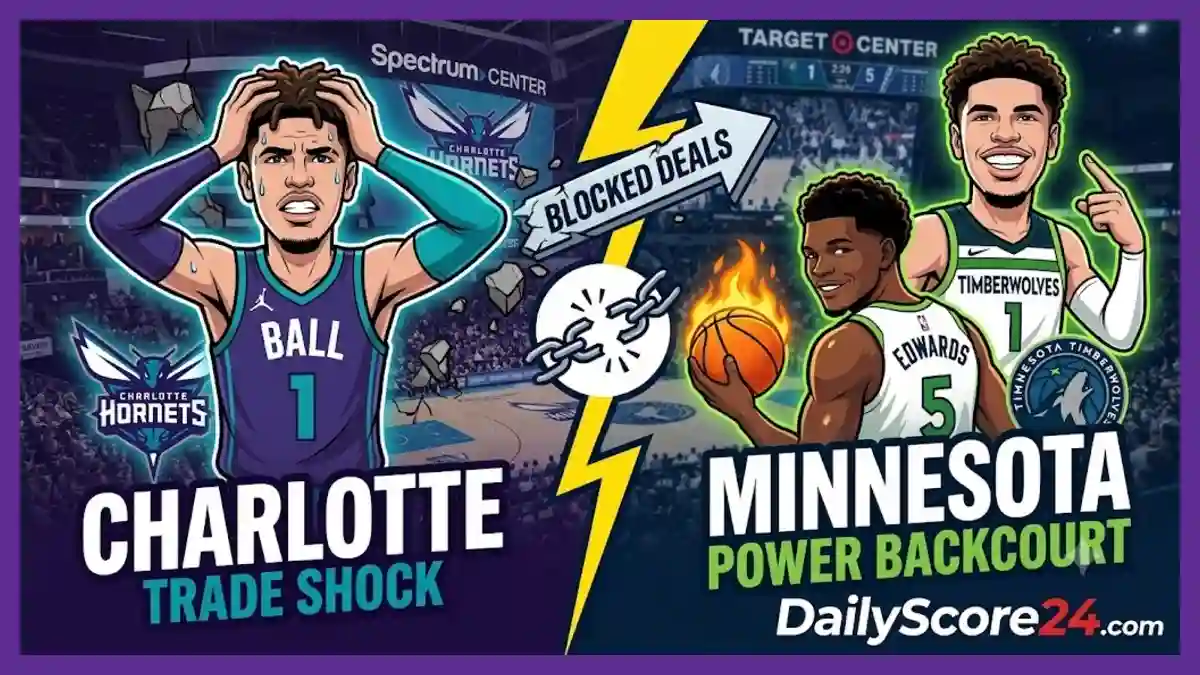
The basketball world shifted following the Shams Charania breaking news confirming the blockbuster deal sending LaMelo Ball and Josh Green to Minneapolis. Initial evaluations of the Minnesota Timberwolves trade grades highlight the massive competitive impact of forming an Anthony Edwards LaMelo Ball backcourt. For Charlotte, this move triggers extensive Charlotte Hornets roster moves centered on accepting the Naz Reid trade package. Understanding the complete LaMelo Ball trade details requires examining complex salary cap implications 2026 and strict NBA trade exceptions rules. Because these transactions are tied to the NBA moratorium rules July 6, league officials must review team caps, while head coach Charles Lee player defensive criticism adds tactical context to the guard’s departure.
Breaking Down the Deal: LaMelo Ball Trade Details
The transactional framework of this deal involves a massive exchange of proven talent and long-term draft collateral. The Minnesota Timberwolves acquired point guard LaMelo Ball and wing Josh Green from the Charlotte Hornets. In return, the Hornets received center-forward Naz Reid alongside an extensive portfolio of draft picks.
The draft compensation sent to Charlotte includes an unprotected 2033 first-round draft pick. Additionally, the Timberwolves surrendered first-round pick swaps for the years 2028, 2029, and 2030. The package is completed by three future second-round selections landing in Charlotte for 2029, 2032, and 2033.
This transaction is structured to materialize as part of a larger multi-team trade. League sources indicate the deal will integrate the transaction where Minnesota agreed to send Julius Randle to the Brooklyn Nets in an arrangement involving the Chicago Bulls. Because of the sheer scale of moving pieces, front offices are working through complex asset matching before the formal league registry opens.
Early Verdicts and the Minnesota Timberwolves Trade Grades
Initial industry evaluations of the Minnesota Timberwolves trade grades reflect a high-risk, high-reward strategy by team executives Alex Rodriguez and Marc Lore. The franchise received a consensus grade of “B+” from various national outlets, balancing the acquisition of an All-Star playmaker against the loss of an incredibly popular rotational anchor.
The primary justification for the move centers on maximizing the peak competitive window of franchise cornerstone Anthony Edwards. Analysts point out that the team stagnated at times last season, culminating in a second-round playoff exit in six games against the San Antonio Spurs. Bringing in an elite facilitator addresses the half-court offensive limitations that have plagued the roster during critical postseason moments.
However, the cost of the transaction caps the early Minnesota Timberwolves trade grades from reaching an absolute “A.” Relinquishing a high volume of future draft picks through 2033 severely restricts the front office from making secondary moves. Furthermore, parting with draft control under the new league rules introduces variables regarding where those future slots will ultimately land.
Fast Facts: The Blockbuster Exchange
| Acquired by Minnesota | Acquired by Charlotte |
| LaMelo Ball (PG) | Naz Reid (PF/C) |
| Josh Green (SG/SF) | 2033 Unprotected First-Round Pick |
| 2028, 2029, 2030 First-Round Swaps | |
| 2029, 2032, 2033 Second-Round Picks |
Analyzing the Anthony Edwards LaMelo Ball Backcourt Dynamics
The structural assembly of an Anthony Edwards LaMelo Ball backcourt fundamentally alters the offensive baseline of the Western Conference. Minnesota urgently required elite perimeter creation following a devastating postseason injury to Donte DiVincenzo, who ruptured his Achilles during the playoffs.
Ball brings rare size and vision to the point guard position, standing at 6-foot-7 with elite floor-mapping capabilities. Last season, Ball appeared in 72 games, averaging 20.1 points, 7.1 assists, and 4.8 rebounds per game. He finished second in the entire league in total three-pointers made with 272, proving his utility as a high-volume spacer.
The pairing directly addresses the defensive coverages that opposing coaching staffs utilized to slow down Edwards. Opponents frequently deployed aggressive double-teams to force the ball out of Edwards’ hands. ESPN front-office analyst Brian Windhorst summarized the tactical shift following the news:
“This is a move to get Edwards the kind of backcourt running mate he needs. Ant Edwards was a guy that people, after Giannis getting traded, were like ‘Is this the next star player to be traded?’ … He’s tired of being double-teamed. They give him a dynamic scorer in the backcourt. You throw a double team at Ant Edwards with LaMelo Ball on the court? You are playing with fire. LaMelo will drop 10 three-pointers on you in the blink of an eye.”
The Financial Blueprint: Salary Cap Implications 2026 and Trade Exceptions
Navigating the financial architecture of this deal required intense manipulation of current collective bargaining agreements. The complex salary cap implications 2026 dictated that Minnesota aggregate outgoing assets to absorb Ball’s lucrative contract. Ball has three years remaining on his current contract and becomes eligible to sign a two-year extension worth $119.2 million starting July 6.
For the Charlotte Hornets, the trade clears massive long-term commitments and generates unparalleled financial flexibility. By sending out Ball’s contract, Charlotte creates an NBA-record trade exception of nearly $41 million. This historic mechanism allows the Hornets front office to absorb premium contracts in future trades without sending matching salary back.
The timing of these maneuvers remains strictly bound to the calendar. Under the NBA moratorium rules July 6, no trades or free agent signings can be officially executed or finalized by the league office until the formal lifting of the league-wide freeze. Teams are permitted to reach verbal agreements, but full cap accounting and physical examinations must wait for the moratorium deadline.
Regarding the wider market mechanics of draft capital under new league guidelines, ESPN front-office analyst Bobby Marks shared his perspective prior to the draft sequence:
“I think superstars, teams are always going to trade first-round picks. I think there’s a little bit of uncertainty when it comes to trading second-round picks just based on its inverse order, so there’s the unknown on where it lands. I think there is a little bit of hesitation here as far as just because we haven’t gone through it yet, as far as where potential picks can be.”
Frontcourt Departures: The Naz Reid Trade Package Context
The emotional and tactical anchor of the return package for Charlotte is center-forward Naz Reid. The 26-year-old big man has spent all seven of his professional seasons in Minnesota, developing into one of the most revered figures in franchise history. Reid won the 2023-24 NBA Sixth Man of the Year award and has maintained elite production ever since.
Last season, Reid appeared in 77 contests, averaging 13.6 points and 6.2 rebounds per game while converting 37 percent of his attempts from beyond the three-point arc. He secured consecutive top-five finishes in Sixth Man of the Year voting over the past two seasons. The departure of Julius Randle earlier in the week was supposed to elevate Reid into a permanent starting role for the Timberwolves.
Instead, the front office elected to use Reid’s highly marketable contract to balance the financial parameters of the Ball acquisition. This leaves Minnesota with significant depth issues across their frontline rotation alongside Rudy Gobert. Replacing Reid’s unique combination of interior size, floor spacing, and locker room leadership represents the steepest hurdle to validating the team’s premium trade evaluation.
Resetting the Roster: Charlotte Hornets Roster Moves Evaluated
The departure of Ball signals a definitive structural pivot for the Charlotte front office under General Manager Jeff Peterson. The franchise is shifting offensive responsibilities toward their rising wing tandem of Brandon Miller and Kon Knueppel. Miller led the team in scoring last year with 20.2 points per game, while Knueppel finished second in Rookie of the Year voting after leading all league rookies in three-pointers made.
Charlotte acted immediately to address the vacancy at point guard created by the trade. The front office agreed to a three-year, $74 million contract with free-agent guard Coby White to serve as the new projected starter. White previously averaged 15.6 points per game in a 21-game stint with the team after arriving at the preceding trade deadline.
Tactically, the transition allows the Hornets to reshape their defensive identity. While Ball provided exceptional offensive production, his recurring defensive deficiencies caused tension internally. Head coach Charles Lee player defensive criticism had previously highlighted these shortcomings as a source of ongoing irritation during film sessions and team meetings.
During a Thursday news conference introducing newly drafted first-round picks Hannes Steinbach and Christian Anderson Jr., General Manager Jeff Peterson declined to comment extensively on the pending blockbusters. He maintained a disciplined stance regarding league rules:
“There will be a time when we will address the roster and the transactions and stuff.”
The franchise now moves forward with a clear youth movement, an historic trade exception, and a modernized backcourt structure built around financial stability.
Stay sharp with Daily Score 24!