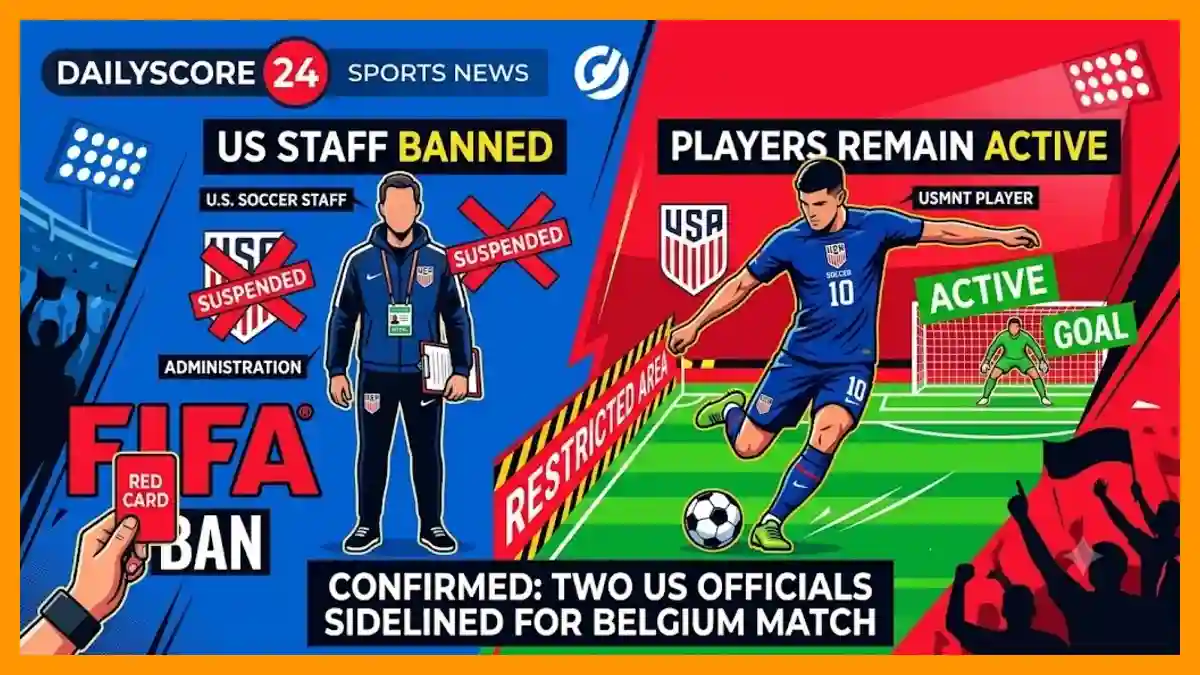
Inside the Fallout: How FIFA disciplinary code expulsions section Banned USMNT Staff
Following sudden suspensions under FIFA disciplinary code expulsions section rules, U.S. officials sat out the Belgium match in Seattle.
The enforcement of the FIFA disciplinary code expulsions section has taken center stage amid critical international soccer governance updates following a major administrative crisis. Strict adherence to World Cup restricted area access rules resulted in the sudden pre-game suspension of two American officials. While discussions surrounding corporate hospitality ticket availability and lucrative sports media broadcasting rights usually dominate tournament administrative briefings, recent Gianni Infantino executive decisions have shifted focus toward compliance. Following official U.S. Soccer Federation formal statements, transparency under rigorous World Cup knockout stage regulations remains heavily scrutinized. This development has sparked numerous sports journalism integrity articles analyzing strict FIFA stadium credential guidelines during the tournament.
The dispute stems directly from events occurring immediately after the United States national team secured a victory against Bosnia-Herzegovina in the Round of 32. Striker Folarin Balogun received a red card in the 64th minute of that match for serious foul play following a video assistant referee review. Despite his dismissal, Balogun returned to the pitch post-match to celebrate the victory with his teammates. This field entry directly violated established safety protocols, prompting FIFA to issue a series of unexpected disciplinary documents just hours before the subsequent Round of 16 match against Belgium in Seattle.
Technical Enforcement of the FIFA Disciplinary Code Expulsions Section
The procedural handling of these matchday violations highlighted an unprecedented level of regulatory oversight by tournament organizers. Under standard operating protocols, the governing body distributes a singular disciplinary brief prior to each round of fixtures. For this specific matchday, administrators distributed three distinct updates, segregating individual player cautions from administrative staff violations. One document detailed the probation status of Balogun, while another specifically targeted team manager Sam Zapatka and vice president of security Frank Pannell.
Legal analysts examining the FIFA disciplinary code expulsions section note that its provisions dictate strict zoning boundaries for penalized personnel. Banned officials are permitted to occupy standard spectator seating during their suspensions, but they face absolute exclusion from the immediate perimeter of the pitch. The regulations strictly prohibit any physical presence in the locker rooms, tunnel areas, or technical zones during the active match window. Furthermore, any direct or indirect communication with active players or technical coaching staff is explicitly forbidden under these operational guidelines.
Disciplinary Discrepancies and World Cup Restricted Area Access Rules
The operational roles of Zapatka and Pannell within the federation made their sudden stadium bans highly disruptive to team logistics. Zapatka has managed day-to-day administrative operations and logistics for the men’s national team since his promotion in 2020. Pannell, a veteran security professional with an extensive career background in federal agencies like the Secret Service, directly managed delegation safety. Their absence forced remaining team staff to rapidly adjust operational workflows right before a high-stakes knockout match.
Independent reviews show that the penalties were linked to unauthorized entry into restricted zones during the prior round’s post-match celebrations. Investigators confirmed that personnel bypassed security checkpoints to access the playing surface alongside the dismissed striker. Compliance with World Cup restricted area access rules is maintained through electronic tracking and designated stadium credentials. By stepping onto the grass, the officials triggered a formal review by the tournament’s disciplinary committee, which handles credentials and pitch security layout parameters.
Tournament Disciplinary Data Summary
| Individual Affected | Specific Role / Position | Action Taken by Committee | Regulatory Provision Cited |
| Folarin Balogun | Starting Striker | $40,000 Fine & Probation | Article 14 & Article 66 |
| Sam Zapatka | Administrative Manager | One-Match Stadium Ban | FIFA disciplinary code expulsions section |
| Frank Pannell | VP of Security | One-Match Stadium Ban | World Cup restricted area access rules |
Impact of Gianni Infantino Executive Decisions on Governance
The rigid application of these measures reflects broader corporate governance initiatives enacted under current tournament leadership. Recent Gianni Infantino executive decisions have reinforced zero-tolerance policies regarding stadium security breaches and matchday compliance. This structural push ensures that all participating member associations adhere to identical operational standards, regardless of host nation status. The implementation of these strict measures directly impacts global sports asset valuations and multi-million dollar corporate partnerships.
The ongoing focus on regulatory precision influences secondary economic structures, including digital engagement and sports betting trends. When key administrative or technical staff face sudden bans, oddsmakers and analytical systems adjust risk metrics for match environments. Furthermore, player availability issues connected to these rulings directly influence player contract valuation metrics and long-term club recruitment strategies. Maintaining institutional control over the stadium environment remains a primary objective for international football executives managing global sports properties.
U.S. Soccer Federation Formal Statements and Response
The domestic governing body moved quickly to address the logistical fallout while remaining compliant with international mandates. The U.S. Soccer Federation formal statements confirmed that both Zapatka and Pannell complied fully with the stadium restrictions during the match against Belgium. Federation spokespeople explicitly noted that the staff suspensions were entirely separate from the legal appeals process regarding Balogun’s playing eligibility. The striker was ultimately cleared to play after the committee opted to suspend his match ban on a one-year probation track.
“A sending-off automatically incurs suspension from the subsequent match,” the FIFA Disciplinary Committee chairperson stated in the formal ruling. “If a player or team official is sent off as a result of a direct or indirect red card, they will automatically be suspended from their team’s subsequent match.”
The federation chose to direct all subsequent operational and legal inquiries regarding the exact filing details back to the Zurich-based judicial bodies. This administrative compliance ensured that no further institutional penalties were levied against the host nation’s delegation. The lack of public elaboration from both organizations left the details of the incident confined to the official event logs.
Institutional Precedents Within World Cup Knockout Stage Regulations
The enforcement actions taken in Seattle follow a clear historical framework established across previous international tournaments. Under World Cup knockout stage regulations, all disciplinary actions are accelerated to ensure fast resolution between matches. This system prevents legal gridlock from delaying the progression of the tournament bracket. Similar strict interventions occurred during previous cycles when unauthorized support personnel entered technical areas without valid tier-one credentials.
This strict methodology mirrors previous enforcement actions used during high-profile European club fixtures and international matches. For example, during a major international fixture last November, the committee applied Article 27 to manage equivalent squad infractions. The consistent enforcement of these rules protects commercial interests tied to league media rights and global broadcast delivery systems. Ensuring clean, uncompromised match presentation remains vital for protecting the financial architecture of international tournaments.
Why This Matters for Global Soccer Operations
The procedural fallout highlights the operational challenges facing modern soccer federations operating under strict international guidelines. Every administrative staff member must maintain absolute compliance with protocol, as any deviation directly impacts team performance. On the pitch, the distracted American squad suffered a decisive 4–1 defeat against Belgium, concluding their tournament run. The off-field administrative issues demonstrated how minor operational errors can escalate into significant organizational challenges under intense global media scrutiny.
Ultimately, this case establishes a firm standard for the remainder of the competition cycle. Federations are now aware that security managers and administrative directors face the same penalties as players and coaches. As governing bodies negotiate future sponsorship impact deals and commercial expansions, administrative compliance will remain a core operational priority. The enforcement of these rules ensures that the operational integrity of the event matches its commercial and athletic scale.
Stay sharp with Daily Score 24!