Triumph at the Lottery: How the 2026 MLB Draft Order Reshaped Franchise Roster Fallouts
The Chicago White Sox lead the first round draft board as official pick assignments alter franchise capital and financial allocations.
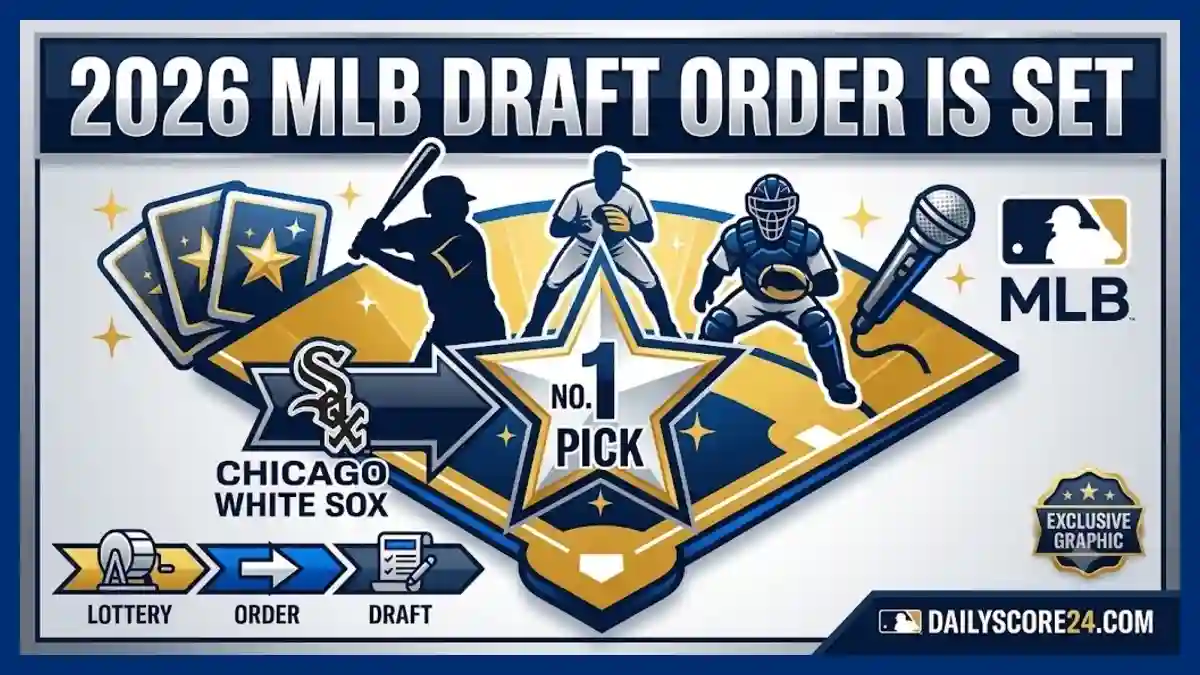
The Chicago White Sox hold the first overall pick in the 2026 MLB Draft order list today, positioning the franchise at the forefront of the annual player allocation event. This position was solidified following the team’s victory in the draft lottery conducted on December 9, 2025, during the winter meetings in Orlando, Florida. Entering the drawing with a 27.73 percent mathematical probability, the club secured the premium draft position ahead of the Tampa Bay Rays and the Minnesota Twins.
The primary allocation process opens on July 11, 2026, at the Pennsylvania Convention Center in Philadelphia, Pennsylvania. Broadcast coverage is shared across platforms, with the first ten selections appearing on NBC and subsequent rounds carried by MLB Network and MLB.com. The assignment of the opening slot has generated distinct organizational directions regarding talent acquisition, team restructuring under General Manager Chris Getz, and fan response to the team’s long-term competitive path.
Key Metrics & First Round Draft Order Baseball Logistics
The structural framework for the opening phase of the draft consists of thirty-eight individual selections. This total includes standard regional assignments, lottery results, and supplemental compensation slots. The draft order incorporates competitive balance rounds alongside standard sequential picks.
| Pick Number | Franchise | Acquisition Type / Notes |
| 1 | Chicago White Sox | Lottery Winner (27.73% Odds) |
| 2 | Tampa Bay Rays | Lottery Selection |
| 3 | Minnesota Twins | Lottery Selection |
| 4 | San Francisco Giants | Lottery Selection |
| 29 | San Francisco Giants | Acquired from Cleveland Guardians |
| 33 | Tampa Bay Rays | Acquired from Baltimore Orioles |
| 34 | Chicago White Sox | Acquired from Pittsburgh Pirates |
Note: The first round draft order baseball sequence incorporates trades finalized up to July 10, 2026. This includes the transaction between the Chicago White Sox and the Pittsburgh Pirates.
On July 10, 2026, the Chicago White Sox adjusted their pick inventory by trading infielder Jacob Gonzalez and left-handed pitcher Brandon Eisert to the Pittsburgh Pirates. In return, the White Sox received pitcher Jaden Woods and the 34th overall selection, which rests within Competitive Balance Round A. This roster modification directly alters the capital available to the club on the opening day of the event.
Tactical Evaluation of the 2026 MLB Draft Prospects Rankings
According to the official 2026 MLB draft prospects rankings published by MLB Pipeline, the player evaluation pool features three prominent targets at the top of the board. The organization’s scouting division has narrowed its target list to a trio of distinct amateur athletes. The candidates represent varying developmental timelines and positional defensive traits.
Grady Emerson: An 18-year-old high school shortstop from Fort Worth, Texas, currently holding the number one position in the updated draft prospects rankings.
Roch Cholowsky: A 21-year-old shortstop from UCLA, who entered the year as the consensus favorite following an award-winning sophomore campaign.
Vahn Lackey: A 21-year-old junior catcher from Georgia Tech who compiled a .397 batting average, 20 home runs, and a 1.291 OPS during the collegiate season.
Scouting Director Mike Shirley clarified the team’s current posture regarding these targets, noting that the decision-making process has shifted into a highly competitive three-player race. The evaluation centers on whether to select a polished collegiate performer or invest in a high-upside high school infielder.
Analysis of Financial Metrics and Roster Strategy
The financial framework governing the opening pick carries a fixed slot value of $11.35 million. Under Major League Baseball’s collective bargaining agreement, teams must manage their total bonus pools precisely to avoid tax penalties or the forfeiture of future draft capital. The decision at number one impacts the subsequent strategy for the 34th pick acquired from Pittsburgh.
Organizational leadership has indicated that financial mitigation will not dictate the choice at the top of the order. The scouting department’s mandate from the front office emphasizes raw talent maximization rather than signing a player to an under-slot contract to save pool space for later rounds. This perspective prioritizes long-term player contract valuation models over short-term financial flexibility.
Human Impact and Regional Scouting Focus
The selection process extends significant influence to the local amateur baseball ecosystem in Illinois. The 2026 draft pool features three suburban Chicago prospects positioned within the top 100 rankings. This local group highlights the developmental programs operating within the team’s immediate geographic market.
Landon Thome: An infielder from Nazareth High School, committed to Florida State University, ranked at number 34. He is the son of former White Sox infielder Jim Thome.
Ethan Bass: A shortstop representing Glenbrook North High School, committed to Wake Forest University, positioned at number 71.
Jack Slighton: A right-handed pitcher out of Lyons Township High School, committed to the University of Cincinnati, holding the number 89 spot.
The presence of legacy and local talent within the top rounds provides the scouting department with familiar targets. The franchise has established a consistent pattern over the preceding four draft cycles by selecting regional high school players in the early phases of the selection meeting.
Broader Context and Historical Draft Benchmarks
The implementation of the draft lottery system was designed to alter the incentives surrounding regular-season performance. The current system ensures that the worst-performing teams are no longer guaranteed the absolute top selection. This structural adjustment forces front offices to balance active roster management against long-term minor league development.
Historically, securing the first overall pick provides franchises with a foundational asset capable of accelerating competitive timelines. However, variance in player development means amateur statistics do not always correlate perfectly with major league success. The White Sox front office faces the pressure of converting this high-probability lottery outcome into sustainable on-field production to alter their standing in the American League Central.
Why This Matters Going Forward
The decision reached by the Chicago scouting staff on July 11, 2026, establishes the trajectory for the organization’s rebuilding phase. Choosing between the defensive profile of Cholowsky, the ceiling of Emerson, or the offensive production of Lackey shapes the team’s depth chart for the next five to seven seasons.
Furthermore, the integration of the newly acquired 34th selection allows the team to double down on elite amateur talent during the first day of the event. As the broadcast commences from the Pennsylvania Convention Center, the execution of these selections will determine the effectiveness of the club’s talent acquisition strategy under its current front-office administration.
Stay sharp with Daily Score 24!