Fallout Inside Mercedes: The Tactical Secrets of the Kimi Antonelli and George Russell Rivalry
How the high-stakes intra-team battle between the Silver Arrows teammates alters the 2026 title landscape and drives global media rights demand.
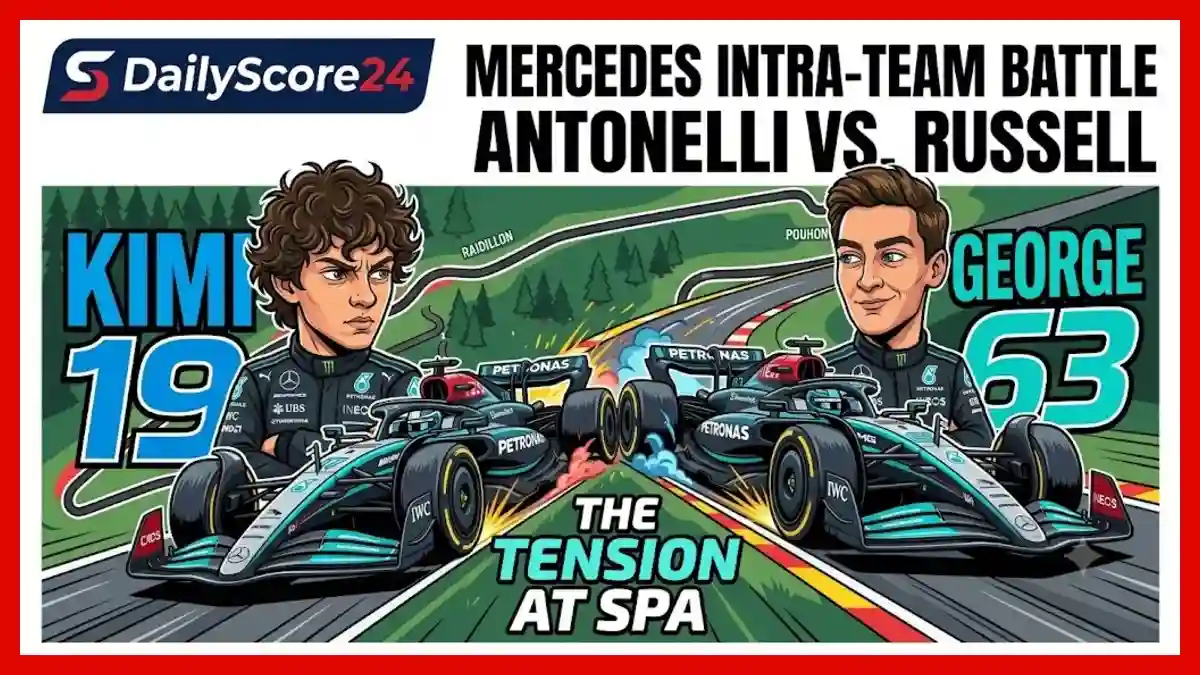
The Formula 1 paddock lands at the iconic Spa-Francorchamps circuit with Mercedes teammates Kimi Antonelli and George Russell locked in a tense battle for the 2026 World Championship. The intra-team rivalry between Kimi Antonelli and George Russell matters profoundly right now because it disrupts traditional internal dynamics at Mercedes-AMG, forces international fans to weigh an established multi-time race winner against a teenage prodigy, and heavily alters the competitive landscape of the sport. Furthermore, this championship narrative is driving massive search interest that commands premium ad rates from international streaming providers and VPN affiliates eager to broadcast the high-stakes European leg of the calendar.
As the grid transitions away from the legacy era of Lewis Hamilton at the Silver Arrows, Toto Wolff’s junior driver development pipeline is facing its ultimate trial on track. Observers at the Circuit de Spa-Francorchamps note that while the team holds a comfortable lead in structural constructor points, the individual driver management is becoming increasingly fragile. Ferrari and McLaren remain poised to capitalize on any strategic errors committed by the Brackley-based outfit during this critical phase of the season.
The Standings Shift for Kimi Antonelli and George Russell
Heading into the dense Ardennes forest, the championship gap has drastically narrowed following a series of mechanical anomalies and clean track limits enforcement. Kimi Antonelli continues to lead the Drivers’ Championship with 179 points, but his lead was trimmed significantly after failing to score significant points in recent rounds. George Russell sits in second place with 154 points, relentlessly leveraging his extensive multi-season experience with the team to erode his rookie teammate’s advantage.
The internal tension reached a public peak during media day availability in Belgium. Russell openly stated that the 25-point differential between the two drivers was an accurate reflection of their performance metrics across the initial nine races. Antonelli quickly countered the assessment, highlighting that racing misfortunes—such as Russell’s retirement while leading the Canadian Grand Prix and his own front wheel assembly failure at Silverstone—make pure point comparisons fundamentally incomplete.
2026 Belgian Grand Prix Track Schedule & Standings
| Session / Metric | Date / Detail | Local Time (CEST) | Key Variables |
| Practice 1 | Friday, July 17 | 13:30 – 14:30 | Initial system baseline evaluations |
| Practice 2 | Friday, July 17 | 17:00 – 18:00 | Long-run simulation parameters |
| Practice 3 | Saturday, July 18 | 12:30 – 13:30 | Low-fuel qualifying simulation |
| Qualifying | Saturday, July 18 | 16:00 – 17:00 | Grid position allocation |
| Grand Prix | Sunday, July 19 | 15:00 | 44 Laps of high-speed competition |
| Championship Gap | Antonelli vs. Russell | 25 Points | Vulnerable to a single DNF |
Performance Analytics Behind Kimi Antonelli and George Russell
A granular look at the performance analytics reveals why both drivers are operating at the absolute limit of their machinery. Antonelli has secured five Grand Prix victories and five pole positions in his debut year, signaling immense raw speed. However, his reliance on optimization has been hindered by low-grip operational errors, notably visible during track limit violations in Miami and suboptimal qualifying sequences in Barcelona and Spielberg.
“I wouldn’t say 10 out of 10… I’d say 8.5 out of 10,” Antonelli reflected when grading his own season execution, noting critical areas like poor race starts in Japan despite eventually recovering for the win.
Conversely, George Russell has demonstrated superior consistency when the car’s aerodynamic platform remains stable. The technical staff at Mercedes note that energy management at Spa-Francorchamps is one of the most severe tests of the annual calendar, resulting in a high degree of electrical clipping along the Kemmel Straight. How both drivers configure their low-downforce setups to handle the sweeping first sector while preserving tires in the technical second sector will dictate the outcome of the weekend.
Why the Rivalry of Kimi Antonelli and George Russell Reshapes F1
The competitive friction between Kimi Antonelli and George Russell extends far past the asphalt of the Belgian circuit. In the broader economic ecosystem of motorsport, the intensity of this battle directly impacts player contract valuation and long-term team investments. With both drivers officially locked into the Mercedes lineup, corporate partners are closely monitoring how the internal team hierarchy develops.
This direct teammate friction draws distinct historical parallels to the legendary intra-team title fights of the past, most notably the intense rivalry between Ayrton Senna and Alain Prost. Much like that classic era, small operational mistakes in pit stops or minor discrepancies in aerodynamic updates can shift the entire balance of power within the garage. The lack of team orders from Toto Wolff ensures that every single on-track encounter carries maximum risk for the constructor’s title ambitions.
Commercial and Streaming Impact of the Ardennes Battle
The commercial footprint of this weekend has reached unprecedented heights across standard broadcasting channels. The global surge in search traffic has dramatically altered the monetization landscape for digital coverage, driving sports betting trends toward highly volatile live-in-race options. Because the internal battle remains entirely unpredictable, sportsbook margins have tightened significantly on qualifying projections.
Simultaneously, league media rights value continues to climb as a direct result of these organic, unscripted team rivalries. International streaming providers are deploying targeted premium subscription tiers to capture audiences who require uninterrupted, multi-camera feeds of the Mercedes pit wall. The surge in geoblocked digital viewership has additionally created a lucrative advertising pipeline for virtual private network affiliates during this high-demand European racing window.
Human Impact and the Paddock Environment
At its core, the weekend at Spa-Francorchamps remains a human drama played out at over 300 kilometers per hour. The local Belgian fan communities and traveling spectators packing the grandstands around Eau Rouge and Raidillon are witnessing a shift in generational power. For the teenage Italian rookie, the pressure of replacing a historic champion while defending a title lead has introduced intense scrutiny from the international press corps.
The paddock environment inside the Mercedes hospitality suite remains polite but visibly guarded. Engineers and mechanics are split between the two garages, working under strict parameters to ensure absolute mechanical parity for both competitors. With the unpredictable microclimate of the Ardennes forest presenting a constant threat of rain, the human element of driver instinct will ultimately override data simulations when the lights go out on Sunday.
Stay sharp with Daily Score 24!