Egypt vs Australia Stunner: How a Keeper Gambit Sparked Knockout Triumph
The Pharaohs edge past the Socceroos in a dramatic penalty shootout at Dallas Stadium to seal a historic round of 16 spot.
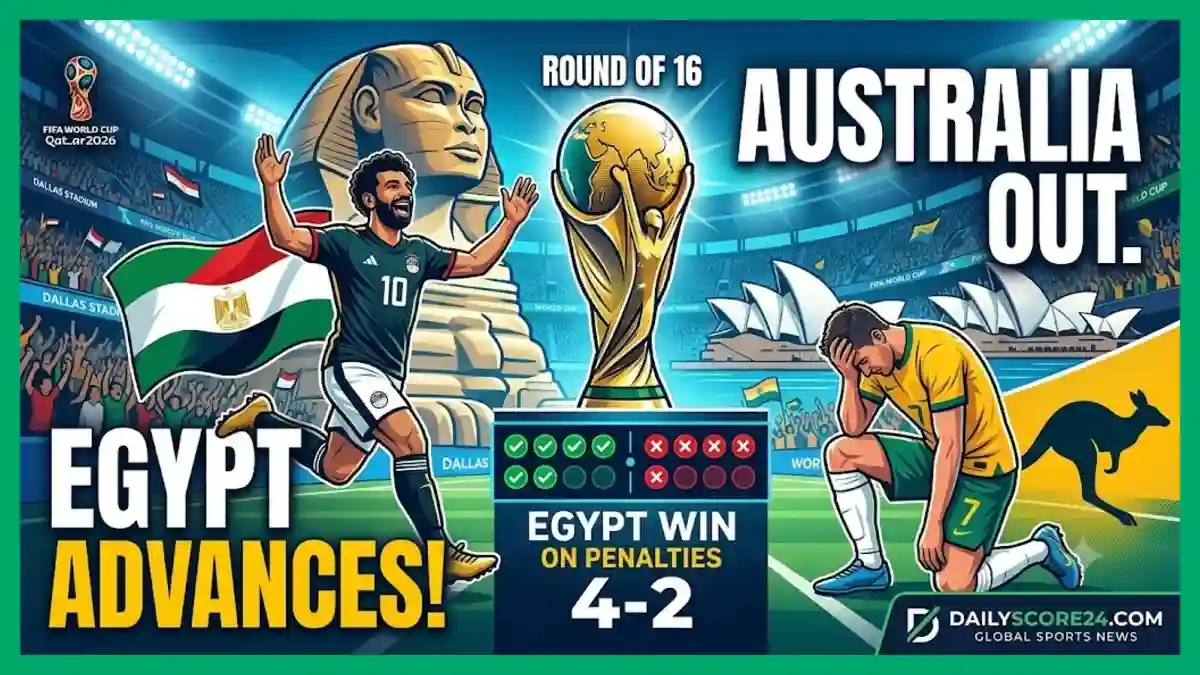
The Egypt vs Australia round of 32 knockout fixture at the FIFA World Cup 2026 culminated in a historic milestone for African football on Friday. Following a grueling 1-1 draw through 120 minutes of intense action at Dallas Stadium in Arlington, Texas, the Egypt soccer team secured their path to the next phase with a dramatic 4-2 penalty shootout victory. The high-stakes match saw tactical maneuvering, crucial defensive interventions, and individual brilliance that immediately defined the tournament’s knockout identity.
What is currently known about this fixture reflects a monumental shift in tournament momentum: Egypt’s tactical resilience guided them through severe injury setbacks, Australia’s campaign ended despite a dominant defensive recovery, and the global fan base witnessed premium tournament drama. The match context features the historical importance of the Pharaohs making their debut in a World Cup knockout round, the tactical drama surrounding Mohamed Salah starting despite a hamstring injury, and an unfolding competitive landscape that shapes the upcoming tournament bracket.
Key Metrics & Match Timeline
The chronological trajectory of the match illustrates how thin the margins of error are in the knockout stages of international competitions. The official data provided by tournament tracking outlines the precise moments that dictated the match flow, from the opening whistle through the final spot-kick.
Match Progress and Key Incidents Table
| Match Minute | Event Type | Player Involved | Team | Current Score |
| 13′ | Regular Goal | Emam Ashour | Egypt | 0 – 1 |
| 45′ | Substitution | Kai Trewin (In) / Jordan Bos (Out) | Australia | 0 – 1 |
| 55′ | Own Goal | Mohamed Hany | Australia | 1 – 1 |
| 73′ | Double Substitution | Ajdin Hrustić, Mohamed Touré (In) | Australia | 1 – 1 |
| 79′ | Substitution | Trézéguet (In) / Karim Hafez (Out) | Egypt | 1 – 1 |
| 105′ | Substitution | Hamza Abdelkarim (In) | Egypt | 1 – 1 |
| 118′ | Goalkeeper Change | Mathew Ryan (In) / Patrick Beach (Out) | Australia | 1 – 1 |
| 120′ | Penalty Shootout | Hossam Abdelmaguid (Winning Goal) | Egypt | 1 – 1 (2–4 Pen) |
Tactical Analysis: Structural Breaks and Defensive Interventions
The tactical battle shifted fundamentally in the second half when structural fatigue impacted Egypt’s defensive shape. In the 55th minute, an unfortunate defensive deflection resulted in a Mohamed Hany own goal, allowing Australia to level the score. This unfortunate milestone marked Hany as the first player to record two own goals in the same World Cup tournament, a statistic that severely impacted Egypt’s tactical game plan and forced them into a deeper defensive block.
Australia seized control of the midfield tempo through Jackson Irvine and Aiden O’Neill, continually trying to exploit spaces behind the Egyptian fullbacks. However, the performance analytics of the match illustrate how crucial the aerial interventions of Harry Souttar were. The towering defender blocked a powerful curling effort from Emam Ashour in the 102nd minute of extra time, a defensive action that single-handedly prevented an Egyptian winner before the eventual penalty shootout.
The physical toll of the match became prominent during the 30 minutes of extra time. Egypt’s coaching staff utilized strategic depth, introducing forward Trézéguet and later Hamza Abdelkarim to inject fresh pace into transitions. Despite these attacking modifications, the match flatlined in the final moments of extra time as both technical boxes structurally braced for the looming penalty lottery.
The Goalkeeper Gambit and Shootout Execution
As the 120th minute approached, Australian coach Tony Popovic made a highly discussed strategic decision, substituting starting goalkeeper Patrick Beach for the experienced veteran Mathew Ryan. Beach had kept the Socceroos alive in the final minute of regulation time with an exceptional reflex save from a Ramy Rabia effort, a moment described by local journalists as preventing immediate elimination. The goalkeeper switch was explicitly designed to leverage Ryan’s extensive international experience in high-pressure environments.
However, the shootout order revealed a precise, calm execution from the Egyptian side. The penalty shootout progressed as follows:
Round 1: Australia’s Harry Souttar missed the opening spot-kick; Egypt’s late substitute Mahmoud Saber calmly converted. (0–1)
Round 2: Jackson Irvine scored for Australia; Ramy Rabia matched the execution for Egypt. (1–2)
Round 3: Awer Mabil converted cleanly; global icon Mohamed Salah stepped up to strike a flawless third penalty for Egypt. (2–3)
Round 4: Australian defender Lucas Herrington missed his attempt; Egypt’s young defender Hossam Abdelmaguid stepped up and whipped the decisive spot-kick into the bottom left corner past Mathew Ryan. (2–4)
Abdelmaguid’s composure sealed the 4-2 shootout victory, sparking wild celebrations among the traveling North African contingent at Dallas Stadium.
Human Impact and Cultural Resonance
The emotional weight of the victory was visible across the pitch, particularly for tournament captain Mohamed Salah. Having entered the match under an intense cloud of fitness doubts due to a hamstring injury suffered during the group stage finale against Iran, Salah played the full 120 minutes. His inclusion defied initial press assessments and underscored his immense importance to the squad’s competitive belief. Standing on the pitch at full-time, Salah’s relief was shared by millions of fans in Cairo and across the global diaspora.
For Australia, the defeat brings an abrupt and heartbreaking end to a campaign built on defensive grit and unity. The Socceroos had entered unfamiliar territory with a genuine statistical opportunity to secure a historic quarter-final path. The structural heartbreak of exiting via a penalty shootout left key figures like Jackson Irvine visibly devastated on the pitch, highlighting the brutal nature of single-elimination tournament structures.
Historical Context and Commercial Implications
This victory rewrites the competitive history books for the Egyptian Football Association. Prior to this tournament, Egypt had never advanced past the group stages in their previous three World Cup appearances. By securing a spot in the round of 16, this current generation of players has established a new benchmark for North African football.
From a macro commercial perspective, Egypt’s continuation in the tournament directly impacts global media metrics and sponsorship activations. High-value international concepts such as player contract valuation, global television viewership metrics, and sportswear sponsorship impact will see substantial upward revisions as corporate partners capitalize on Egypt’s expanded tournament presence. The presence of premium brands across global digital feeds ensures that the upcoming knockout fixtures remain highly lucrative components of international sports marketing portfolios.
The Path Forward: Upcoming Round of 16 Schedule
The tournament bracket shifts immediately to the next phase, leaving very little recovery time for the advancing squad. The official Egypt soccer team round of 16 schedule forces an immediate logistical pivot as team analysts begin scouting their next technical opponent. High-volume searches for the World Cup full match replay and digital highlights demonstrate the immense global appetite for the unfolding knockout narrative.
With the bracketology completely updated following the events in Texas, sports betting trends and analytical models are adjusting to calculate the performance metrics of an Egyptian side that has proven it can survive maximum pressure. The Pharaohs leave Arlington with physical bruises but an reinforced sense of tactical identity that makes them an incredibly dangerous opponent in the next round.
Stay sharp with Daily Score 24!